Which one is better between Waymo and Tesla?
Engineers often compare their technical dimensions such as sensor count or LiDAR. Business people look at cost, focusing on the price of each sensor and the vehicle. Policy makers emphasize safety, asking whether more sensors truly lead to safety than fewer ones.
But they are not what users expect about the experience. What do people actually want from a self-driving car?
I rode a Waymo in San Francisco. My experience made me think the answer depends on whether I focus on the driver or the passenger.
When Tesla owners talk about FSD (Full Self-Driving), the word that comes up most is productivity as a driver. “I can take a Zoom call.” “I can answer emails.”
In contrast, Waymo passengers talk about something different. “I can speak freely.” “There is no stranger listening.” Sitting in the back seat of the Waymo, I felt it too. The absence of a driver changed the feeling of the ride. The space felt more like my own.
The Waymo has far more sensors than a Tesla, but it does not matter to passengers. What they notice is that there is no one in the front seat.

Engineers, business people, and policy makers tend to optimize for the person operating the system. In autonomous vehicles, that instinct points them toward the driver. But when the car drives itself, the most important person in the vehicle is no longer the driver. It is the passenger. And passengers want something different. Women in particular appreciate riding without a stranger at the wheel.
**
Reference
Oh, D., & Joo, J. (2015). Effect of mechanical perspective-taking method on evaluating user experience. Archives of Design Research, 28(1), 219-231.
Background: Designers often evaluate user experience incorrectly because they take into account less diagnostic information. We propose the mechanical perspective-taking method to control less diagnostic information and improve the evaluation accuracy of user experience.
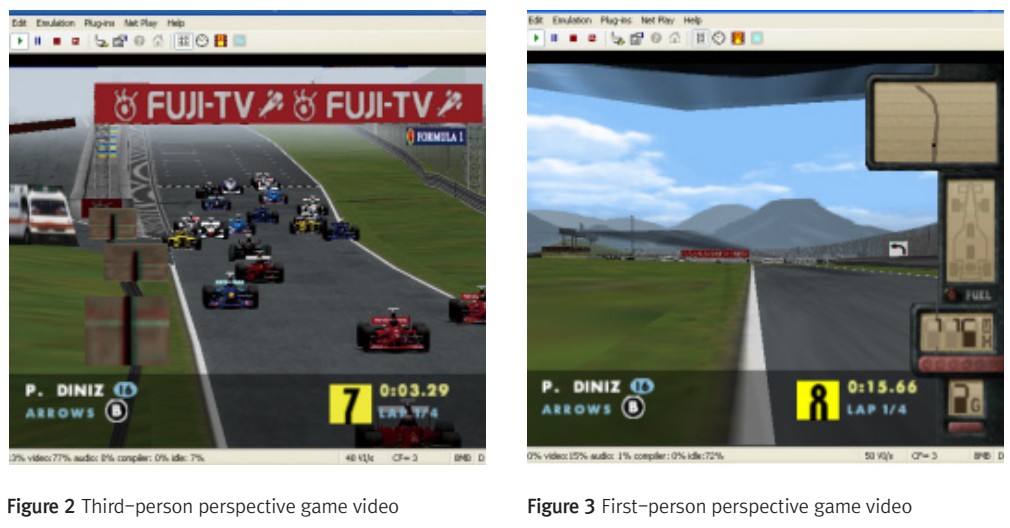
Methods: We conducted an experiment. We manipulated mechanical perspective-taking by changing the point of view without changing the content of the video game; half of the participants watched a video game from the first person point of view and the other half watched it from the third person point of view. Then, all of the participants evaluated one of the two types of airport use experience; one with positive, less diagnostic information and the other with negative, less diagnostic information.
Result: For the airport use experience with positive, less diagnostic information, the participants watching it from the first person point of view evaluated it less positively than the participants watching a video game from the third person point of view. However, the opposite pattern was obtained for the airport use experience with negative, less diagnostic information; the former group evaluated it less negatively than the latter group.
Conclusion: We demonstrated that the mechanical perspective-taking method controls less diagnostic information effectively, which can help people focus on the target experience.