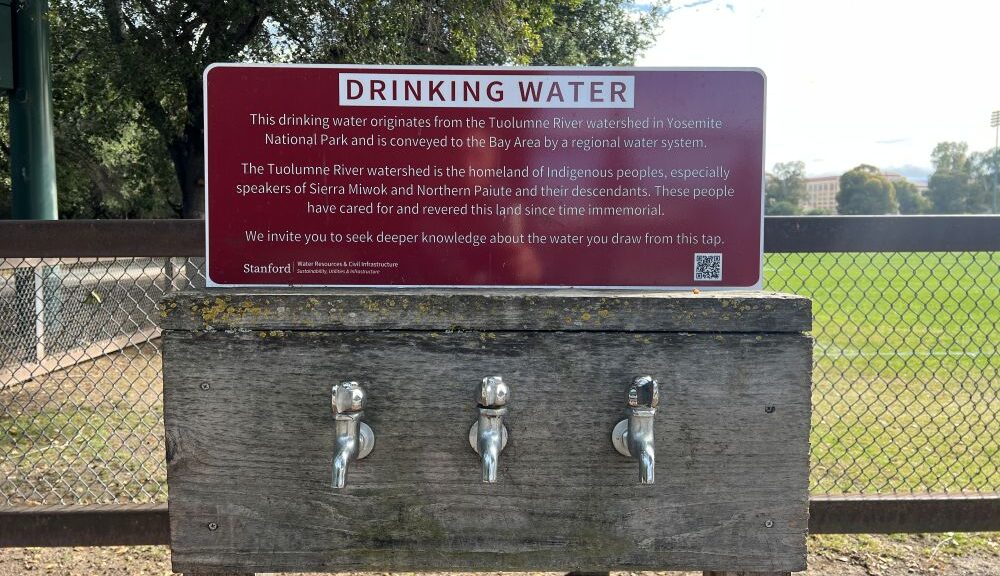
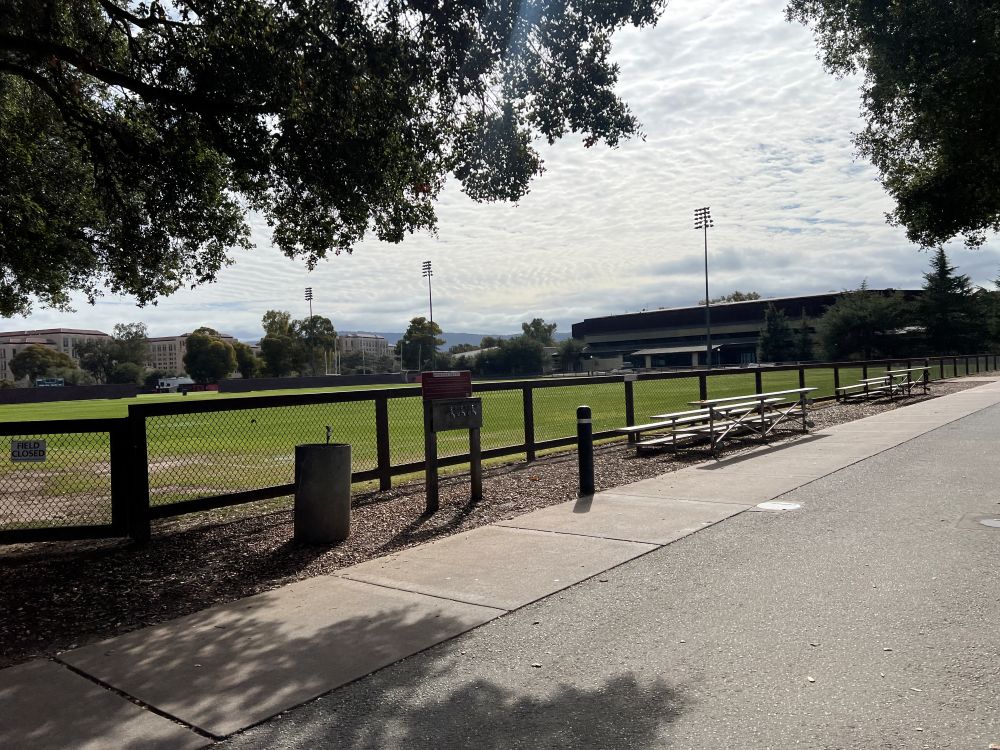
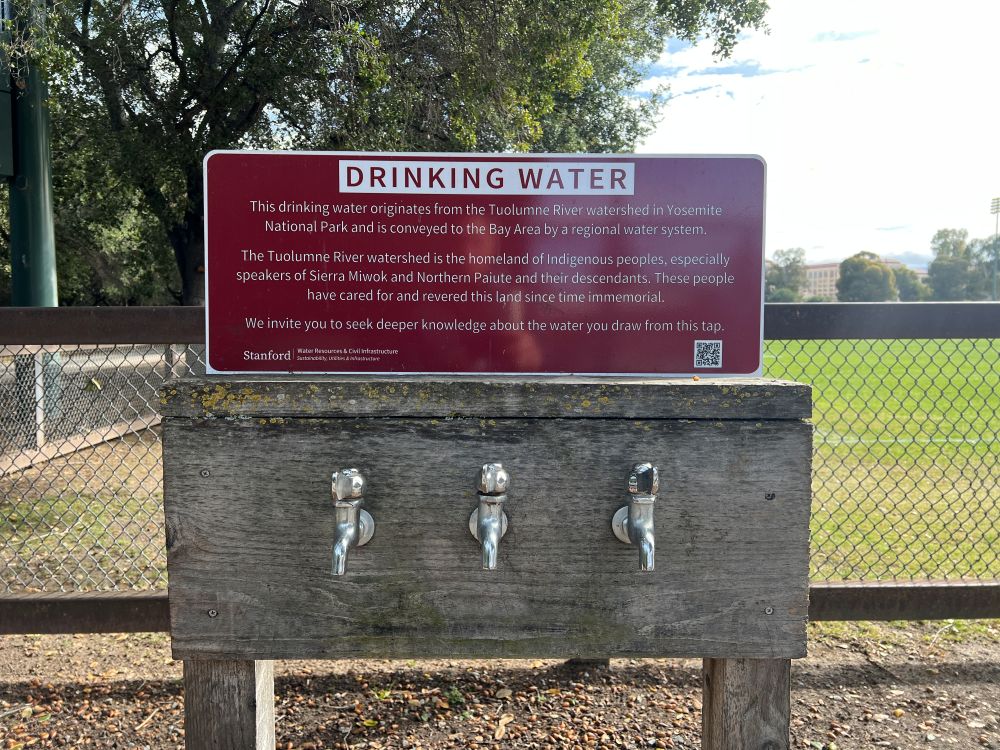
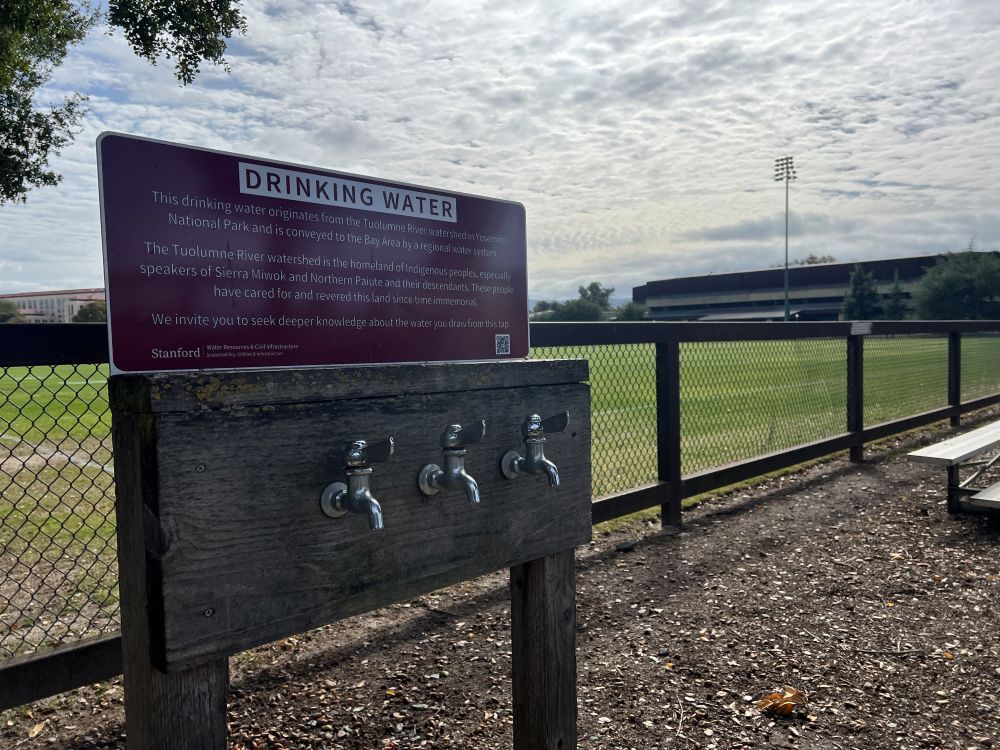
At first glance, this is just an ordinary drinking water tap. But Stanford University has made it something meaningful.
A sign above the tap reads:
This drinking water originates from the Tuolumne River watershed in Yosemite National Park and is conveyed to the Bay Area by a regional water system. The Tuolumne River watershed is the homeland of Indigenous peoples, especially speakers of Sierra Miwok and Northern Paiute and their descendants. These people have cared for and revered this land since time immemorial. We invite you to seek deeper knowledge about the water you draw from this tap.
A simple water tap, something people might otherwise overlook, becomes a reminder of history and respect. Story can enrich everyday experiences, making the ordinary feel significant.
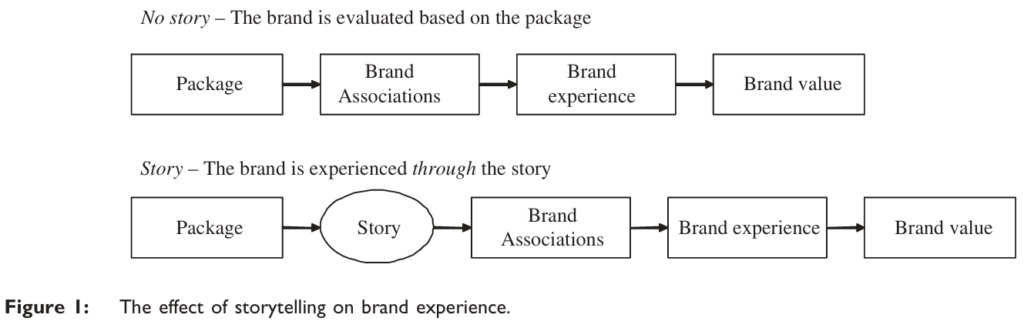
Stories fascinate people and are often more easily remembered than facts. Much has been written about the power of stories in branding, but very little empirical evidence exists of their effects on consumer responses. In the present study, we investigate how a firm-originated story influences consumers’ brand experience, by comparing the brand experiences of two groups of consumers. One group was exposed to the story and one group was not. An existing brand was used in the study, which had not been launched in the focal country. In-depth interviews were conducted with individuals in the two experimental conditions. The comparison revealed remarkable differences between the two groups. Consumers who were exposed to the story described the brand in much more positive terms and were willing to pay more for the product. The study contributes to brand management research and practice by demonstrating the power of storytelling on consumer experiences. The results are also important from a managerial point of view. They demonstrate how brand stories can be used to create and reinforce positive brand associations. A review of past research in combination with the findings demonstrates that more research is needed on the effect of stories on consumer brand responses.
One thought on “How storytelling makes an ordinary tap meaningful”
The Stanford water fountain case presents an example of how a story was added to an ordinary drinking fountain on the Stanford University campus, giving new meaning to an everyday action. The sign above the fountain explains the source of the water, the history it has passed through, and the people connected to that land, encouraging individuals to pause and reflect instead of drinking water without much thought. This case demonstrates that storytelling can change people’s perceptions and attitudes without requiring large budgets or complex equipment.
I agree with the idea presented in this case that when a story is naturally connected to an action, people are more likely to change their behavior. This effect is not limited to large-scale brand campaigns, but can also be achieved in real-world planning and operations carried out with limited resources. I experienced this clearly through my involvement in operating a festival bar as part of the College of Business student council.
The overall concept of our festival was the “four-leaf clover,” symbolizing luck, coincidence, and an experience completed through multiple choices. We applied this concept to the bar event by reinterpreting soju bottle caps. Instead of treating bottle caps as simple trash that is thrown away after drinking, we defined them as the “leaves” of a four-leaf clover.
The structure of the event was simple. When a customer ordered a bottle of soju, they received one bottle cap. They wrote their team number or table number on the cap and placed it into a prize-draw box. At the end of the festival, bottle caps were randomly drawn from the box, and prizes were awarded. We added the story that “one bottle equals one leaf, and four leaves complete a four-leaf clover,” presenting the act of placing the bottle cap into the box as the final step in completing one’s luck.
As a result, clear behavior changes were observed. Many customers collected bottle caps instead of throwing them away, placed additional orders to gather more leaves, or exchanged bottle caps with other tables. The bar became more than just a place to drink alcohol; it became a space where participants collectively completed the festival’s story. This experience allowed me to directly feel how storytelling can reshape the meaning of an action and encourage voluntary participation, similar to the Stanford water fountain case.
However, I do not believe that storytelling is effective in all situations. When I was in high school, there was a campaign called “School Environmental Protection Week” that encouraged the use of reusable cups. During the campaign, reusable cups were printed with messages such as, “This cup is a small choice for the Earth,” and posters and school announcements repeatedly emphasized the importance of environmental protection. In particular, the message “A paper cup lasts only a moment, but a tree takes 20 years to grow” was frequently used to emotionally convey the environmental cost of disposable cups.
At the beginning, student responses were very positive. Many students used reusable cups and shared their meaning with others, and some even took photos and posted them on social media. Using a reusable cup was seen as a conscious and responsible choice, and a strong sense of participation spread across the school.
However, over time, the situation changed. Students were required to return the cups after use and wait for them to be cleaned, and this inconvenience was repeatedly experienced. As a result, the environmental story and message that had been emphasized at the beginning gradually faded from attention. Eventually, many students returned to using disposable cups.
Through this experience, I realized that while storytelling can be effective in initiating behavior change, it struggles to maintain its influence when inconvenience continues. Stories can shift perception and motivate action, but sustaining that action requires more than a compelling message.
In conclusion, the two cases illustrate different outcomes of storytelling in practice. In the festival bar event, storytelling was successfully integrated into the participation structure by redefining bottle caps as leaves of a four-leaf clover, which encouraged engagement and behavior change. In contrast, although the environmental campaign used strong storytelling around reusable cups, the behavior did not last due to repeated inconvenience. These cases show that while storytelling is a powerful starting point for behavior change, sustaining that change requires supportive conditions that make participation easy and practical.
The Stanford water fountain case presents an example of how a story was added to an ordinary drinking fountain on the Stanford University campus, giving new meaning to an everyday action. The sign above the fountain explains the source of the water, the history it has passed through, and the people connected to that land, encouraging individuals to pause and reflect instead of drinking water without much thought. This case demonstrates that storytelling can change people’s perceptions and attitudes without requiring large budgets or complex equipment.
I agree with the idea presented in this case that when a story is naturally connected to an action, people are more likely to change their behavior. This effect is not limited to large-scale brand campaigns, but can also be achieved in real-world planning and operations carried out with limited resources. I experienced this clearly through my involvement in operating a festival bar as part of the College of Business student council.
The overall concept of our festival was the “four-leaf clover,” symbolizing luck, coincidence, and an experience completed through multiple choices. We applied this concept to the bar event by reinterpreting soju bottle caps. Instead of treating bottle caps as simple trash that is thrown away after drinking, we defined them as the “leaves” of a four-leaf clover.
The structure of the event was simple. When a customer ordered a bottle of soju, they received one bottle cap. They wrote their team number or table number on the cap and placed it into a prize-draw box. At the end of the festival, bottle caps were randomly drawn from the box, and prizes were awarded. We added the story that “one bottle equals one leaf, and four leaves complete a four-leaf clover,” presenting the act of placing the bottle cap into the box as the final step in completing one’s luck.
As a result, clear behavior changes were observed. Many customers collected bottle caps instead of throwing them away, placed additional orders to gather more leaves, or exchanged bottle caps with other tables. The bar became more than just a place to drink alcohol; it became a space where participants collectively completed the festival’s story. This experience allowed me to directly feel how storytelling can reshape the meaning of an action and encourage voluntary participation, similar to the Stanford water fountain case.
However, I do not believe that storytelling is effective in all situations. When I was in high school, there was a campaign called “School Environmental Protection Week” that encouraged the use of reusable cups. During the campaign, reusable cups were printed with messages such as, “This cup is a small choice for the Earth,” and posters and school announcements repeatedly emphasized the importance of environmental protection. In particular, the message “A paper cup lasts only a moment, but a tree takes 20 years to grow” was frequently used to emotionally convey the environmental cost of disposable cups.
At the beginning, student responses were very positive. Many students used reusable cups and shared their meaning with others, and some even took photos and posted them on social media. Using a reusable cup was seen as a conscious and responsible choice, and a strong sense of participation spread across the school.
However, over time, the situation changed. Students were required to return the cups after use and wait for them to be cleaned, and this inconvenience was repeatedly experienced. As a result, the environmental story and message that had been emphasized at the beginning gradually faded from attention. Eventually, many students returned to using disposable cups.
Through this experience, I realized that while storytelling can be effective in initiating behavior change, it struggles to maintain its influence when inconvenience continues. Stories can shift perception and motivate action, but sustaining that action requires more than a compelling message.
In conclusion, the two cases illustrate different outcomes of storytelling in practice. In the festival bar event, storytelling was successfully integrated into the participation structure by redefining bottle caps as leaves of a four-leaf clover, which encouraged engagement and behavior change. In contrast, although the environmental campaign used strong storytelling around reusable cups, the behavior did not last due to repeated inconvenience. These cases show that while storytelling is a powerful starting point for behavior change, sustaining that change requires supportive conditions that make participation easy and practical.