First name (or given name) is the name that identifies a specific person. It differentiates a person from other members of a group, such as a family or clan, with whom that person shares a common last name (or family name). While last name is normally inherited, first name is “free to choose” and thus can be unique.
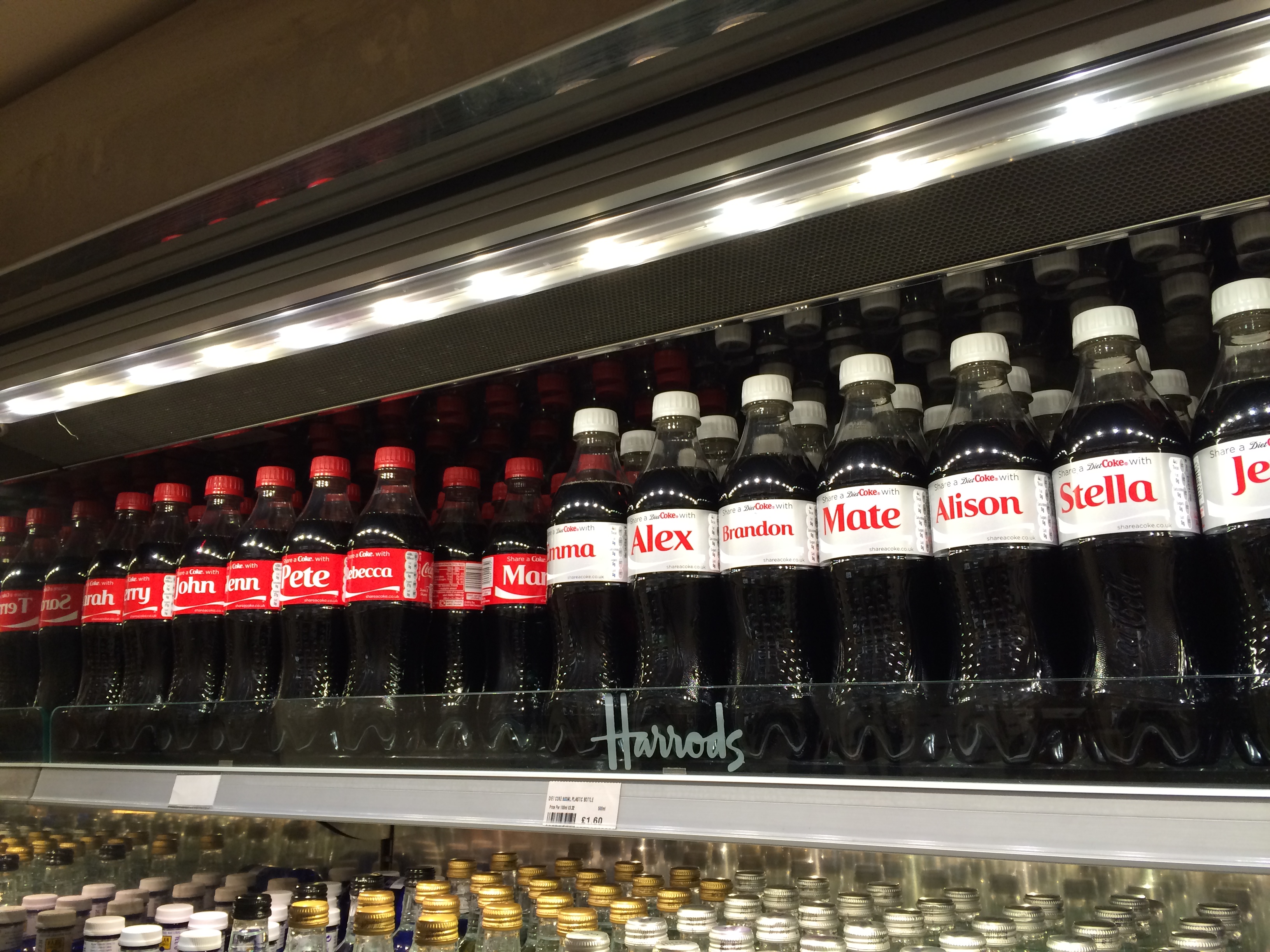
In some countries, however, only a few options seem to be highly popular. Many of my friends who were born and live in US, UK, or Canada have common first names. In English-based countries, Coke’s massively-distributed-but-highly-customized “first name” marketing campaign will work: each bottle of coke has its own first name label such as John, Sarah, Emma, and Alex. However, popular first names seem to be avoided in other countries. Most of my Korean friends have their own unique first names. In this country, Coke marketers may find it difficult to find popular first names and launch a marketing campaign using them.
Then, why do some people pick up popular first names and others avoid them?
Even in the era of personality, ‘common names’ survive in the market. Nowadays, as more and more people decide names based on the meaning of the name itself rather than simply a combination of syllables, they are often named in pure Korean rather than Chinese characters, and despite the diversification of names, popular, in other words, common names always exist that year.
The author argues that popular names are limited in some countries, which is why Coca-Cola’s “name marketing” could be successful in English-speaking countries, but because it tends to avoid common names in other countries, it may be difficult to conduct marketing campaigns using names. However, I don’t think there is a reason why products using “name marketing” won’t be successful, even if Korea is based on the assumption that the number of common names is insufficient compared to the English-speaking world.
A case in point is Lotte’s Kancho. To celebrate the 40th anniversary of its launch, Kancho launched a product with 504 names engraved on the top of the Kancho and held an SNS certification event. As a result, the daily average sales of the GS25 increased by about 290 percent compared to the same period last month, and CU also increased by more than 210 percent during the same period. The method of engraving the name on the product is similar to Coca-Cola, but by engraving the name on the surface of the product, consumers will not buy it with the idea that if it is not their name, they will not buy it, but in contrast, Kancho maximized the game factor that it is impossible to know whether my name is in it or not until the product is purchased and opened directly. With the spread of SNS events, I think the element “Kancho Random Gang” is an example of supplementing the relative absence of common names.
Second, just like the beginning. For us, a soju bottle may be nothing more than a green bottle sold at 5,000 won at a bar. Recognizing this consumer perception, Lotte Liquor carried out the MyLevel project. The MyLevel Project allows people to create stickers with phrases such as “Like Na-yeon” and “Like Jae-woo,” based on the initial product name. Through this, consumers spread MyLevel by turning a common Soju bottle into a special Soju bottle containing their name and voluntarily posting their own Soju bottle on social media. Unlike previous Kancho and Coca-Cola, this case is a case that completely broke away from the restriction that the author said was “unfavorable to lack common names” to produce products in the name of consumers who applied, leading to the success of the project.
If the national atmosphere prefers a common name in conducting name marketing, it will be more convenient to implement it, but I don’t think there is a reason why it can’t arouse consumers’ curiosity.