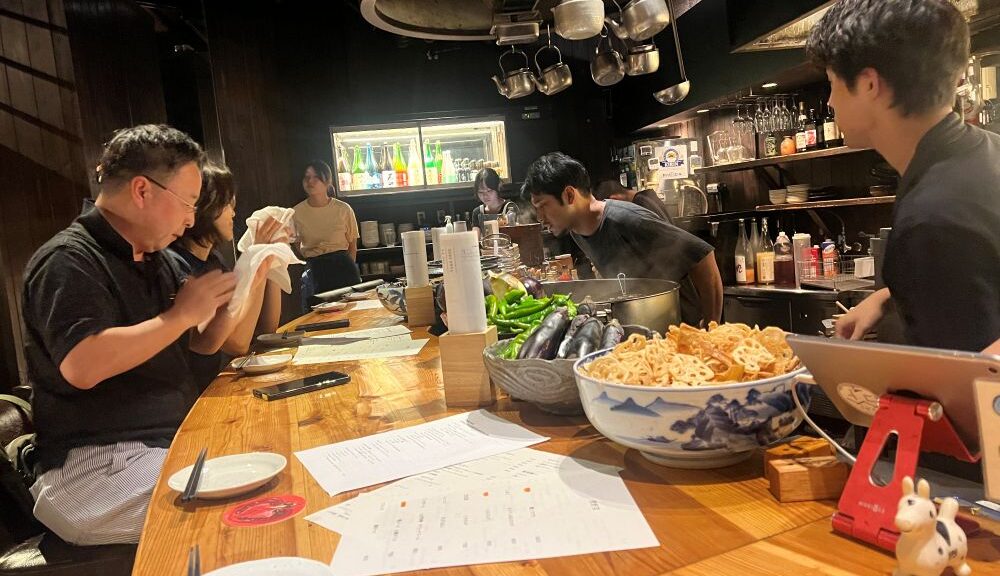
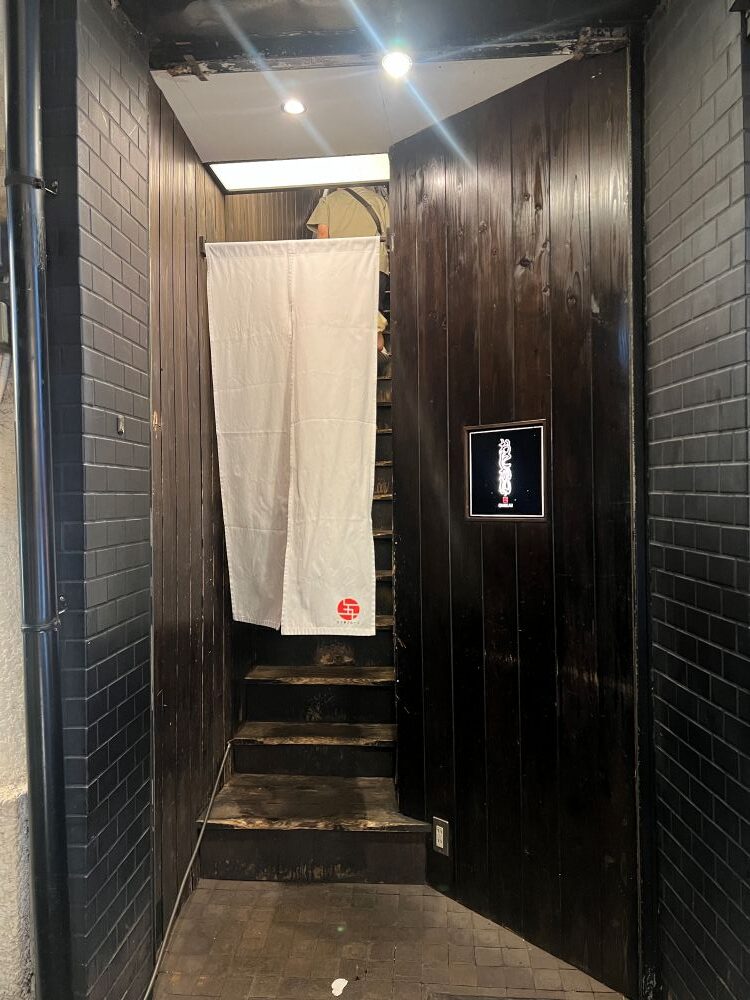
When I first arrived at the narrow entrance of Onikai near downtown Kyoto, I did not expect much. Inside this small restaurant, however, I found a huge counter filled with young, energetic staff who were joking and moving quickly. Since this place felt alive, it reminded me of Dutch Bros in California.
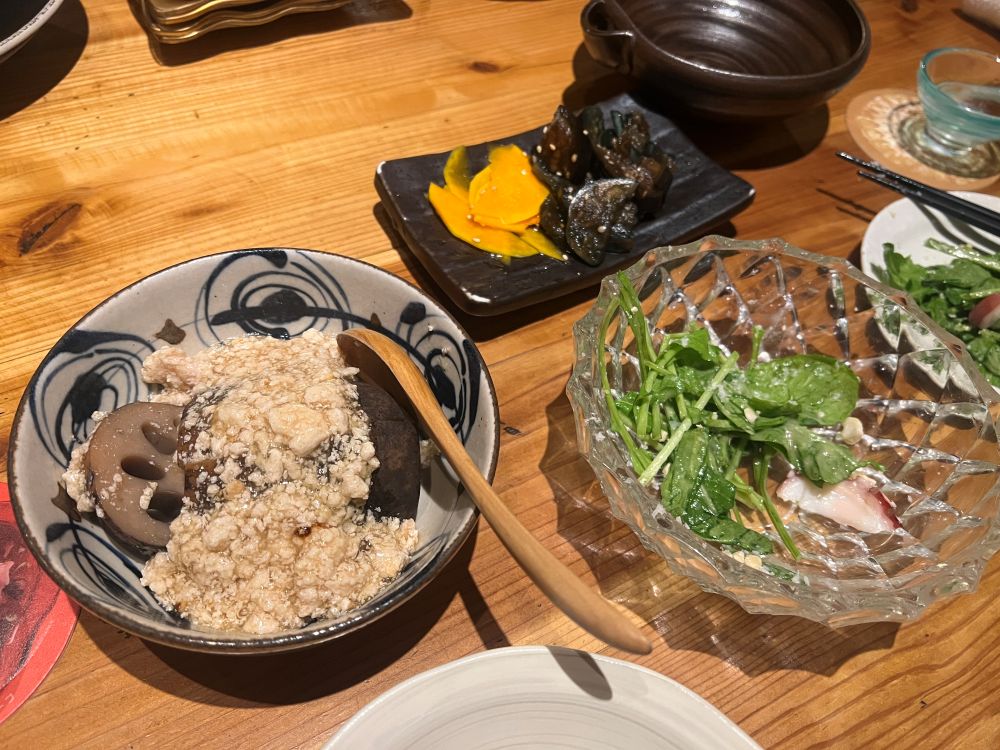
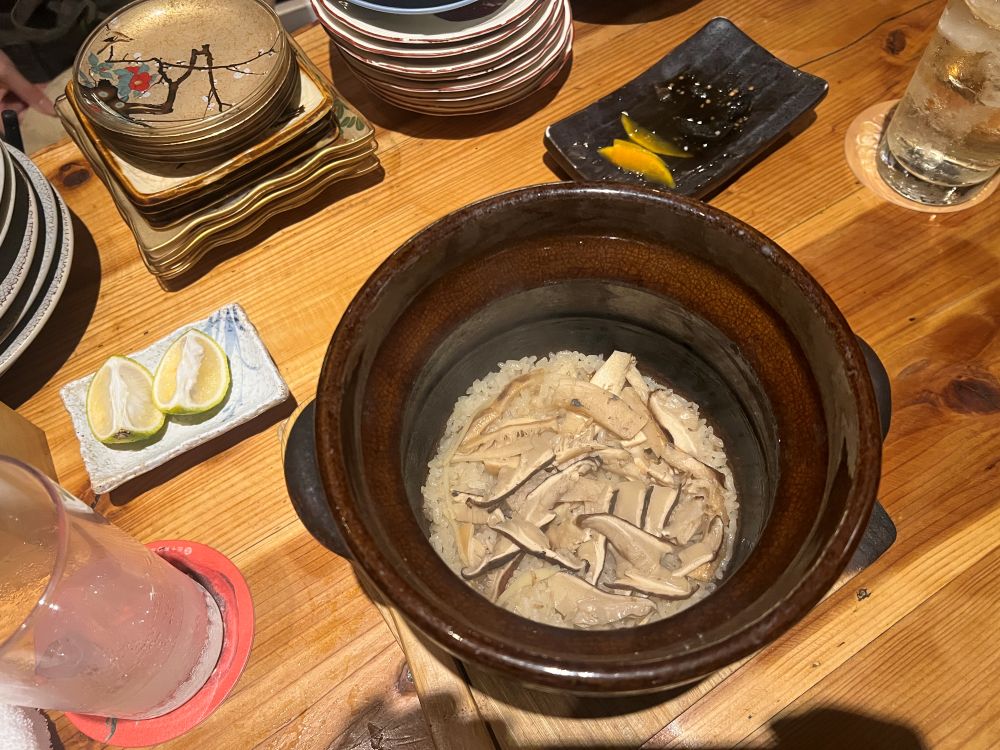
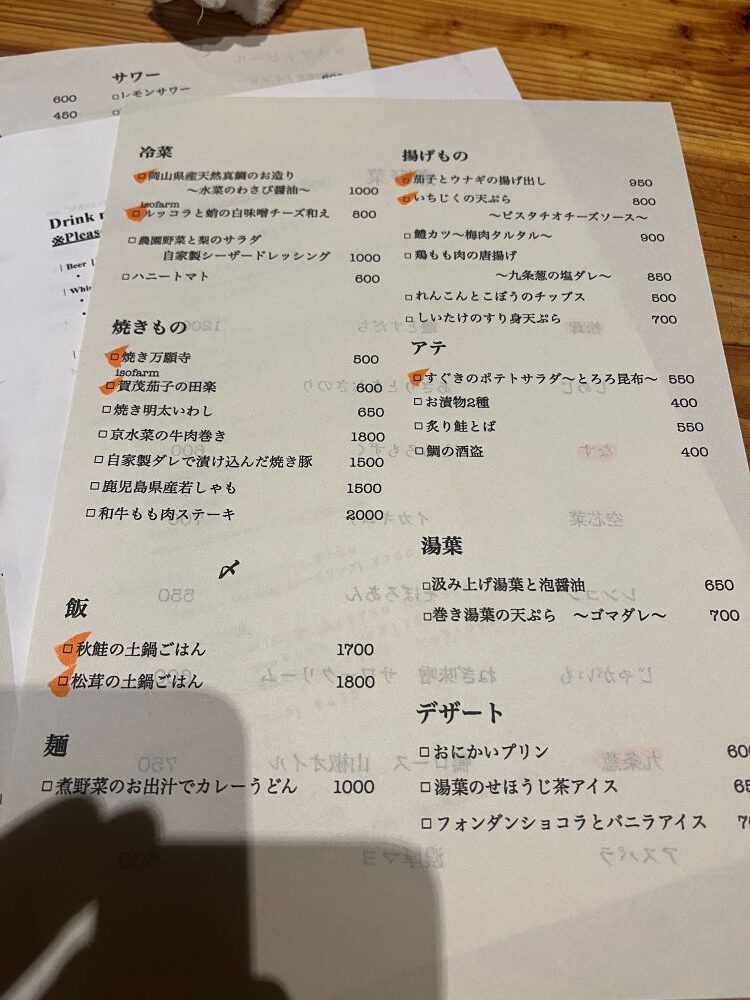
I ordered several dishes: an arugula salad, an eggplant topped with beef sauce, a mushroom rice cooked in a clay pot, and an eggplant slowly burnt and served with sesame. They were light and comfortable. Even when beef was used, they supported vegetables, not dominate them.
Later I learned that Onikai is part of the Isoya group, which runs several restaurants supplied by Isofarm, a local farm near Kyoto Station. Their simple philosophy is to serve vegetables that are fresh, local, and cooked to highlight their natural taste.
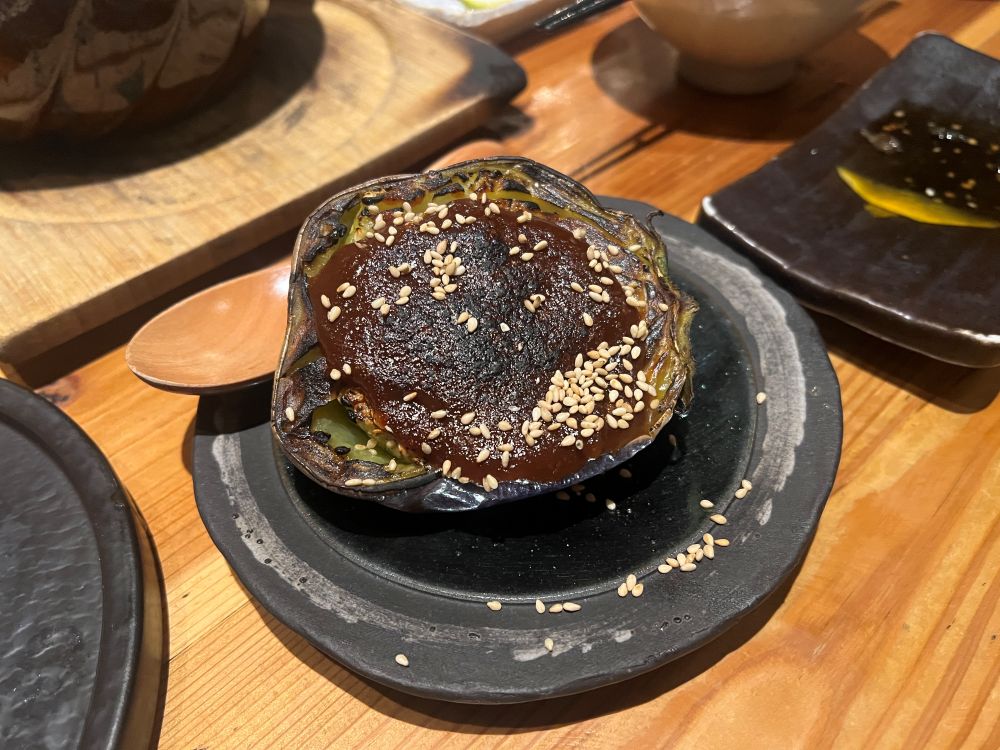
This vegetable-first idea feels right for today’s diners. People care about where their food comes from, but they do not all want to be vegan. Balancing freshness, taste, and casual atmosphere reminded me of how In-N-Out in California became trusted and popular by keeping food local and simple.
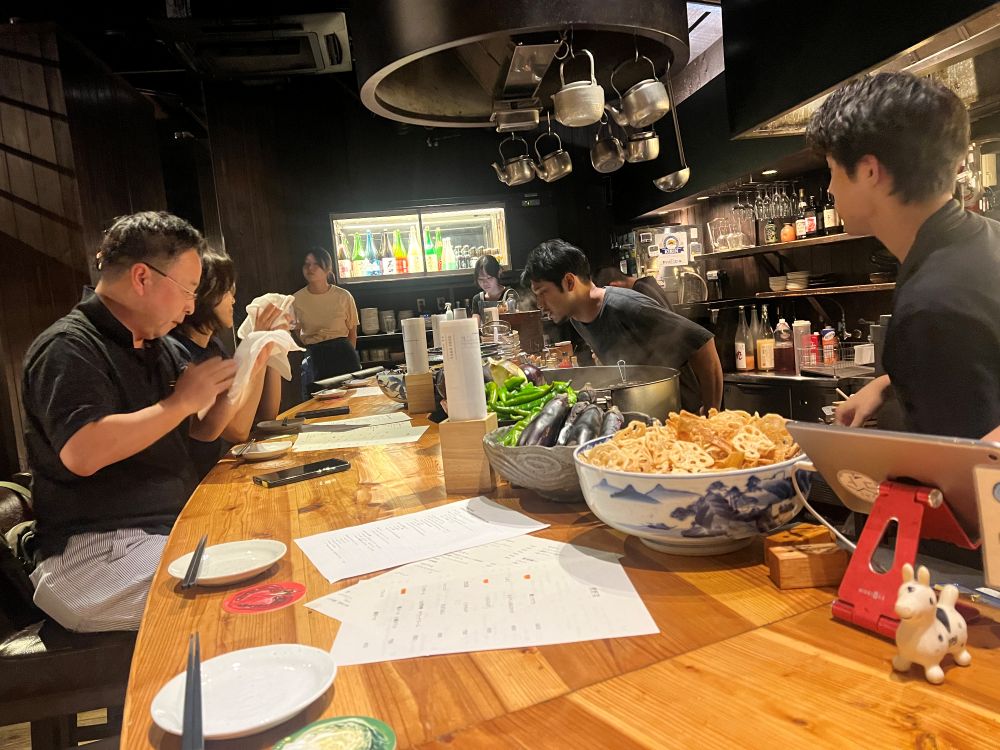
Dining at Onikai made me think more about what to eat in daily life. In many Western countries, people often focus on which vitamins or supplements to take every day. But Onikai’s vegetable-centered dishes remind me that health can come from everyday meals, not from bottles or pills.
I believe vegetable-centric meal will gradually be adopted by more diners around the world, not as a trend, but as a sustainable way of living.
***
Reference
Sun, J. J., & Pham, M. T. (2025). What Makes Consumption Experiences Feel Special? A Multi-Method Integrative Analysis. Journal of Consumer Research, ucaf033.
This article addresses a simple theoretical question of high substantive relevance: What makes a consumption experience special in a consumer’s mind? To answer this question, the authors report an extensive multi-method investigation involving a grounded theory analysis of numerous consumer narratives and in-depth interviews, a field survey, a scale development study, a natural language processing analysis of more than 3 million Yelp reviews, a preregistered multi-factor causal experiment (and its preregistered replication), a blind comparison of hundreds of matched visual Instagram posts by third-party observers, and several small application studies. The findings converge in identifying three major psychological pillars of what makes consumption experiences feel special to consumers, each pillar involving different facets: (a) uniqueness, which arises from the rarity, novelty, irreproducibility, personalization, exclusivity, ephemerality, and surpassing of expectations of the experience; (b) meaningfulness, which pertains to the personal significance of the experience in terms of symbolism, relationships, self-affirmation, and self-transformation; and (c) authenticity, which relates to the perceived genuineness and realness of the experience in terms of its psychological proximity to some original source, iconicity, human sincerity, and connection to nature. As illustrated in the General Discussion, the findings have important substantive implications for the engineering of hedonic consumption experiences.

In the article, he introduces Onikai in Kyoto as a prime example of a vegetable-centric dining experience. By sourcing ingredients directly from a local farm (Isofarm), Onikai builds trust and promotes a sense of wellness for diners. The author concludes that this trend represents a sustainable lifestyle, aligning with Sun & Pham’s (2025) research on “Authenticity” and “Connection to nature”.
I strongly agree with this perspective. However, I would like to extend this view: While serving farm-sourced dishes creates trust, restaurant can maximize “Authenticity” by providing possessable, raw evidence of their sourcing that extends the experience beyond the dining table.
I propose the case of Cuon n Roll – a restaurant chain in Vietnam specializing in traditional wraps. A single serving here can include nearly 10 different varieties of fresh vegetables and herbs, creating a rich and refreshing flavor experience. Whenever my family and I want a light, healthy meal without grease, this restaurant is always our first choice.
>> https://cuonnroll.com/ <<
Similar to Onikai, this restaurant chain operates its own farm called Cuon’s Farm. However, its most unique feature is that customers are gifted fresh vegetables to take home after their meal. The staff explains that these are organic vegetables harvested directly from Cuon’s Farm. Notably, each bundle carries a sticker reading “I am Fresh ‘n Healthy”.
I believe this raw vegetable bundle is not just a gift; it serves as physical evidence of the “farm-to-table” commitment. It allows customers to feel a direct connection to nature even after leaving the restaurant and to affirm their own sustainable lifestyle. Ultimately, this strategy reinforces trust and creates a memorable, genuine brand experience.
**
Additional reference for “tangible proof”
Grayson, K., & Martinec, R. (2004). Consumer Perceptions of Iconicity and Indexicality and Their Influence on Assessments of Authentic Market Offerings. Journal of Consumer Research, 31(2), 296-312.
This article addresses the theoretical ambiguity of “authenticity” in the marketplace. Drawing on Peirce’s semiotic framework, the authors distinguish between two types of authenticity: (a) indexical authenticity, which relies on a factual, spatio-temporal link between the object and its source (distinguishing “the real thing” from copies) ; and (b) iconic authenticity, which relies on physical resemblance or verisimilitude (how well an object mimics the original). Through field research, the authors find that indexical cues are strongly associated with the benefit of “perceived evidence” and verification. This framework supports the idea that consumers value objects that provide tangible proof of their origin, as these objects offer a sense of factual certainty that marketing images alone cannot provide.