I drink wine often. It goes well with dinner, helps me read papers, and soothes me at night. In the past, I enjoyed numerous marriages of soil, weather, and grape variety. Now, my tongue is developed although I neither remember one nor am able to elaborate why I like one.
Recently, I went to Urban Break 2021 and saw a pop-up store of Babe Wine, a brand name of a canned wine. It attracted a crowd of visitors. Out of curiosity, I sampled a sip of Grigio, Rose, and Red. They differed from the wine I experienced before. They came out from icy-cold cans and had bubbles. I ended up failing to like this wine.
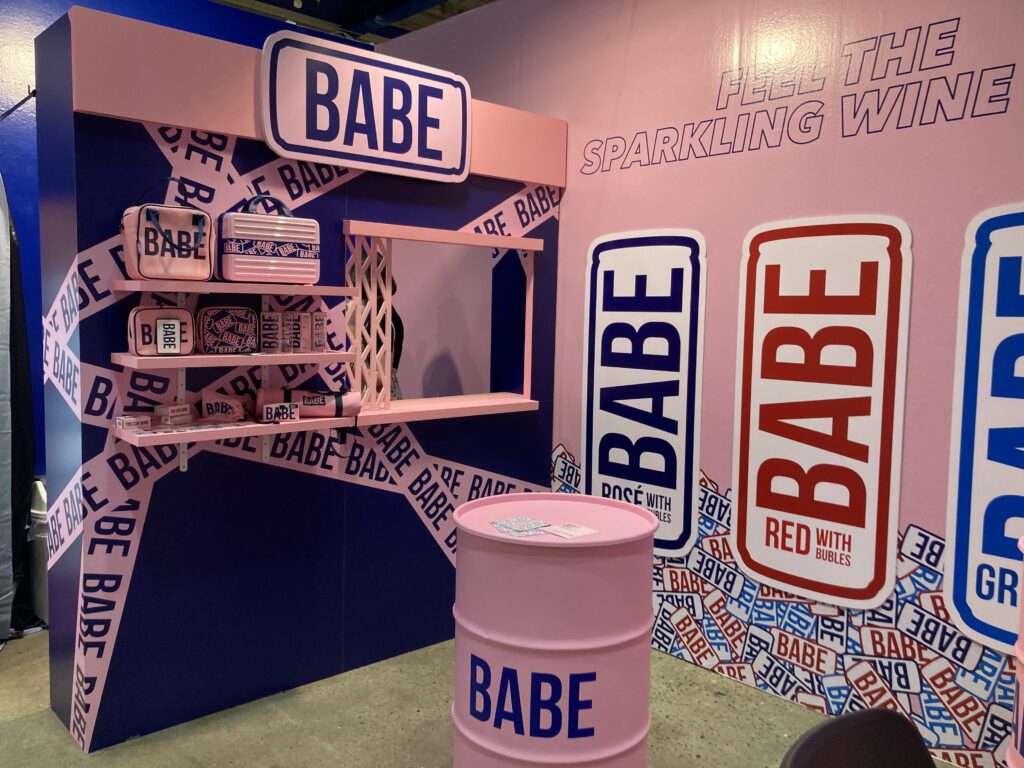
Despite of my disappointment, this canned wine attracts attention internationally. “From 2016-2020, BABE’s CAGR was nearly 2,000% according to IRI. These numbers quickly caught the eye of beverage giant Anheuser-Busch, who acquired Babe in 2019.” According to the article in Forbes, “Babe specifically focused on targeting the wine lover who cracked open bottles on the regular, but “couldn’t name a single brand,” says Ostrovsky.””
Why do people like a canned wine I do not? Indeed, I have a long history of prediction errors. On one hand, I once thought that BTS, Tiktok, and Instagram would fail to make a presence. On the other hand, I expected that Clubhouse, a social audio app, and Gathertown, a meta-verse service, would succeed in Korea. Not surprisingly, my predictions were proven to be incorrect.

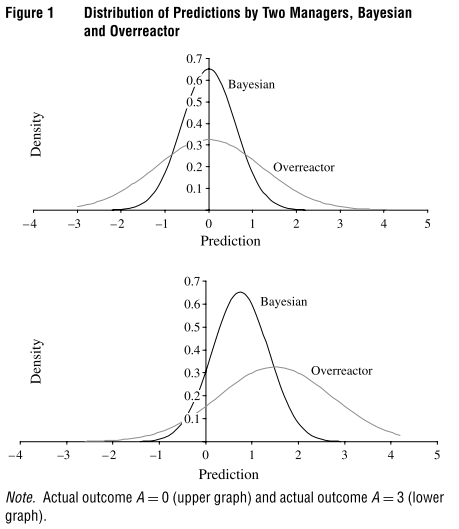
Then, how could experts like me (e.g., wine lovers) predict whether a product is successful in the market when it is designed for novices (e.g., canned wine)? About 10 years ago, researchers at University of Oxford and New York University suggested that an accurate prediction of an extreme event is an indication of poor forecasting ability. This suggests that even experts who have forecasting abilities predict only non-radical events. Predicting the next hit is beyond our control.
***
Reference
Denrell, J., & Fang, C. (2010). Predicting the Next Big Thing: Success as a Signal of Poor Judgment. Management Science, 56(10), 1653–1667.
Successfully predicting that something will become a big hit seems impressive. Managers and entrepreneurs who have made successful predictions and have invested money on this basis are promoted, become rich, and may end up on the cover of business magazines. In this paper, we show that an accurate prediction about such an extreme event, e.g., a big hit, may in fact be an indication of poor rather than good forecasting ability. We first demonstrate how this conclusion can be derived from a formal model of forecasting. We then illustrate that the basic result is consistent with data from two lab experiments as well as field data on professional forecasts from the Wall Street Journal Survey of Economic Forecasts.
As times change rapidly today, innovative and unique new products are constantly flooding the market every single day. Babe Wine was also an innovative new product that differed from the heavy and formal image of traditional wine. This phenomenon, where an individual’s subjective intuition and the actual market outcomes are completely at odds just like this case, caught my attention and felt highly interesting.
As a consumer who is usually highly interested in cosmetics and purchases them frequently, priding myself on having developed a sharp eye for this specific industry by actively following the latest beauty trends, I encountered Etude House’s “cosmetic vending machine” at a train station platform in the past. Observing the unique distribution method where products simply drop out of a machine, combined with its excellent accessibility for busy modern people, my subjective opinion led me to believe, “Wow, this is an incredibly fresh and innovative idea. It will be exceptionally useful if expanded to various locations,” and I was confident of its success. I firmly believed that a product maximizing convenience would naturally dominate the market.
However, completely contrary to my expectations, this cosmetic vending machine faced disregard from the general public and eventually fell short of successfully settling into the mainstream market as initially expected. It was because when purchasing cosmetics, consumers prioritized the “experiential trust” of testing products in person and verifying them with their own eyes far more than mere convenience. Just as canned wine unexpectedly boomed when it was expected to fail, the beauty vending machine failed to meet expectations when it was predicted to succeed, creating a reversed twist of fate.
The argument that accurately predicting extreme events actually implies a lack of predictive ability, and that even experts can only foresee non-extreme, ordinary events, was highly impressive. Amidst a flurry of fast-paced innovations where countless new items pour out continuously like this, I realized once again that predicting the next mega-hit product is ultimately an issue that lies completely outside our realm of human control and intuition.
Your point of view caught my eye and was very interesting. Thanks. I have a question for you.